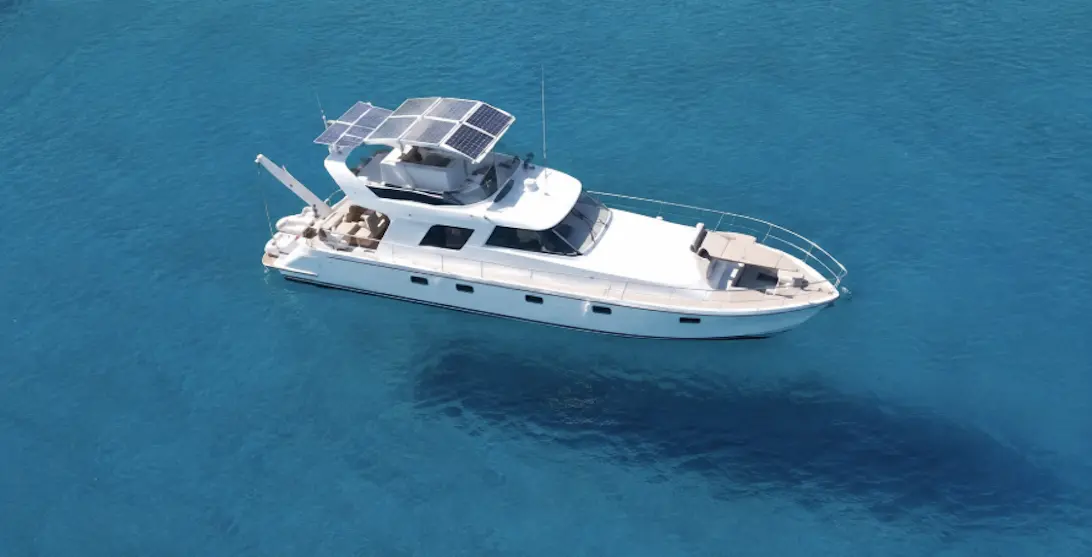
VIP Yacht Charter Turkey: The Architecture of Maritime Sovereignty
"VIP Yacht Charter" Is Not a License. It's a Sentence Someone Wrote in a Brochure.
Search "VIP yacht charter Turkey" and you'll find the same three words repeated by forty different operators, attached to forty different boats, none of them independently verified by anything. There is no regulator who stamps a vessel "VIP." There is no board that certifies a crew "elite." What you're actually being asked to trust, when an operator uses that phrase, is a stranger's word for it: about a coastline that is tectonically active, archaeologically protected below the waterline, ecologically managed above it, and legally governed by rules about flags, cabotage, and mooring that most charter pages never mention because mentioning them is bad for the sale.
Why "VIP" Needs a Better Definition: and What We Use Instead
The result, for a lot of travelers, is a beautiful week that quietly went wrong in ways they never saw: an anchor dropped somewhere it shouldn't have been, a foreign-flagged itinerary that brushed against a cabotage restriction nobody explained, a "traditional gulet" that is traditional in name only, a bay sold as untouched that is in fact under active conservation management for reasons no one on board could tell you. None of that shows up in the photographs. All of it is the difference between a charter that was arranged and one that was actually understood.
We're not going to tell you TurkDMC holds some category of licence that makes us uniquely "VIP-certified," because no such standardized certification exists in Turkish maritime regulation: and any operator implying otherwise is asking you to trust a marketing word, not a verifiable fact.
What does genuinely exist, and genuinely matters, is more specific: Turkish law distinguishes Turkish-flagged from foreign-flagged vessels, private use from commercial charter, and applies cabotage restrictions to how foreign-flagged commercial yachts may move passengers between Turkish ports. The Ministry of Culture and Tourism publishes the framework directly, and the operative detail: vessel length, flag, embarkation and disembarkation terms, licensing category: changes by vessel and by season. We check it for your specific boat before we let you fall in love with an itinerary.
The coastline itself demands the same precision. Gökova Bay has been under formal environmental protection since 1988, with active no-fishing zones and marine governance involving multiple Turkish authorities. Göcek's anchorages moved to a controlled, reservation-based mooring system in 2026, specifically to reduce anchor damage to seagrass meadows that unrestricted anchoring was steadily destroying. These are not obstacles we route around quietly. They're the reason a responsibly built itinerary looks different from a template: and we'll tell you exactly which bay is open, which is limited, and which authority to thank for the water still being that colour.
Our Standard of Verification
Every legal, environmental, or access claim on this page is either a documented public regulation we can name, or a process we verify directly with the vessel, flag state, and relevant Turkish authority before your itinerary is confirmed: never an assumption borrowed from last season's brochure.
How a TurkDMC Charter Is Actually Built
Four disciplined design stages ensuring maritime safety, regulatory precision, and uncompromised coastal literacy.
Discovery: Vessel, Guest, and Intent
Vessel class, flag status, and commercial matching
Before we discuss a single bay, we establish what the boat needs to be for you: a gulet's slower, closer-to-shore character or a larger crewed yacht's range and amenity; how many guests, ages, and mobility needs; whether this is a family week, a milestone celebration, or a small corporate retreat under MICE planning; and, critically, whether the vessel's flag and commercial status are compatible with the itinerary you're imagining. A foreign-flagged private yacht and a Turkish-flagged commercial charter are not interchangeable, and the itinerary you can legally run depends on which one you're on.
How a Charter Actually Happens, Step by Step
No mystery, no theatre: just the six stages every well-run charter passes through, done properly instead of rushed.
Brief & Match
We start with the details that actually determine which yacht makes sense: your dates, guest count, preferred pace, yacht type, dietary needs, and departure hub. Most Turkey charters begin from Bodrum, Göcek, Marmaris, or Fethiye: the choice of hub already shapes which coastline and which regulations apply to your week.
Shortlist & Quote
We review live availability against your brief and bring you a shortlist with crew profiles, specifications, the base charter fee, and honestly estimated additional costs. On crewed charters, fuel, food and beverages, marina fees, and local port taxes are commonly handled through an Advance Provisioning Allowance (APA): a separate running budget, not folded quietly into the headline rate.
Contract & Payment
Once you've chosen a yacht, you sign the charter agreement and pay the deposit. Market guidance commonly cites a 30-50% deposit, with the balance typically due six to eight weeks before embarkation: though exact terms vary by contract, and we walk through yours line by line before you sign anything.
Personalise & Prepare
This is where the week becomes yours: menus, transfers, wellness, celebrations, specialist guides, and routing preferences are finalised. One point we're always upfront about: the captain retains final authority over the route for weather, safety, port availability, and applicable restrictions. That authority isn't a formality; it's the reason the week goes well.
Embark & Settle APA
You meet the crew, complete the onboard safety briefing, and confirm the route together. A typical crewed charter runs seven nights, and many weekly contracts follow a Saturday-to-Saturday pattern: worth building your travel dates around from the outset.
Cruise & Close
The captain adjusts the itinerary as conditions genuinely require: weather, sea state, or a bay that's simply better suited to a different day. At the end of the week, actual APA spending is reconciled against the advance you paid, transparently, so there are no surprises on the final invoice.
What the Market Actually Looks Like
Here are the numbers we're comfortable standing behind, because they reflect the broader charter market rather than a single operator's self-reported claim.
Why we quote ranges, not fixed prices: a €25,000 gulet week and a €350,000 superyacht week are genuinely different products, and any page that quotes you one flat number before knowing your vessel class is guessing on your behalf.
The Coast You're Actually Sailing
Every one of these facts changes how we build your route: not decoration, operating context.
A Coastline Still Being Made
Active Aegean-Anatolian TectonicsSouthwestern Turkey sits within one of the most tectonically active stretches of continental crust on earth: the extending Aegean-Anatolian region. The coves, peninsulas, and steep-sided bays you'll anchor in aren't simply scenic; they're the current, temporary shape of a landscape still being pulled apart and reshaped by faulting and subsidence.
At Knidos, on the Datça Peninsula, research into the ancient harbour has identified active tectonic subsidence: not generalized sea-level rise: as the reason parts of the old port now sit below the water you'll sail over. The coastline you photograph this week is not the coastline of a hundred years ago, and won't be the coastline in a hundred more.
The Sea as an Archive, Not a Backdrop
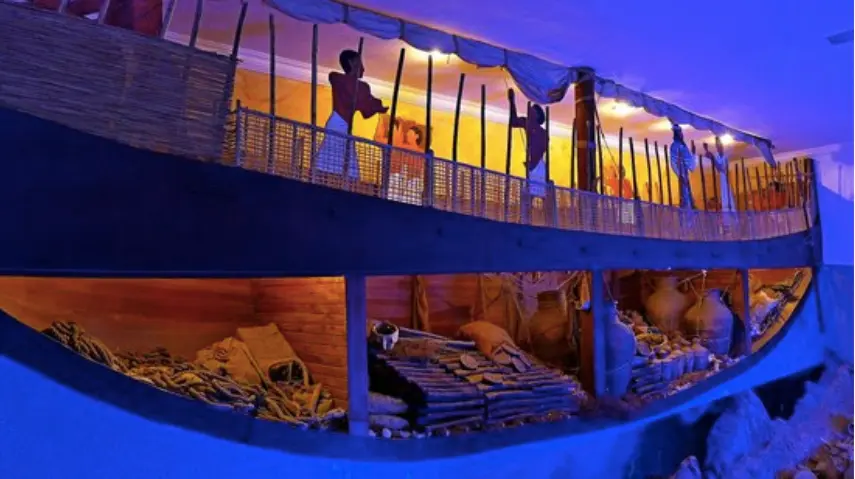
Submerged HeritageBodrum Castle, on its rocky peninsula between two sheltered bays, houses the Bodrum Museum of Underwater Archaeology: recognized as one of the world's most significant collections of its kind, built from material recovered from scientifically excavated ancient shipwrecks, including the Gelidonya, Yassıada, and Serçe Limanı wrecks.
What that means practically: the routes your yacht follows through these waters are ancient trade corridors, not just pretty passages, and the sea beneath your keel has been preserving evidence of that commerce for three thousand years. We won't tell you where to dive on a protected wreck: that access is legally restricted, for good reason: but we will make sure you understand exactly what you're sailing over.
Lycia Is Not "Ancient Greece"
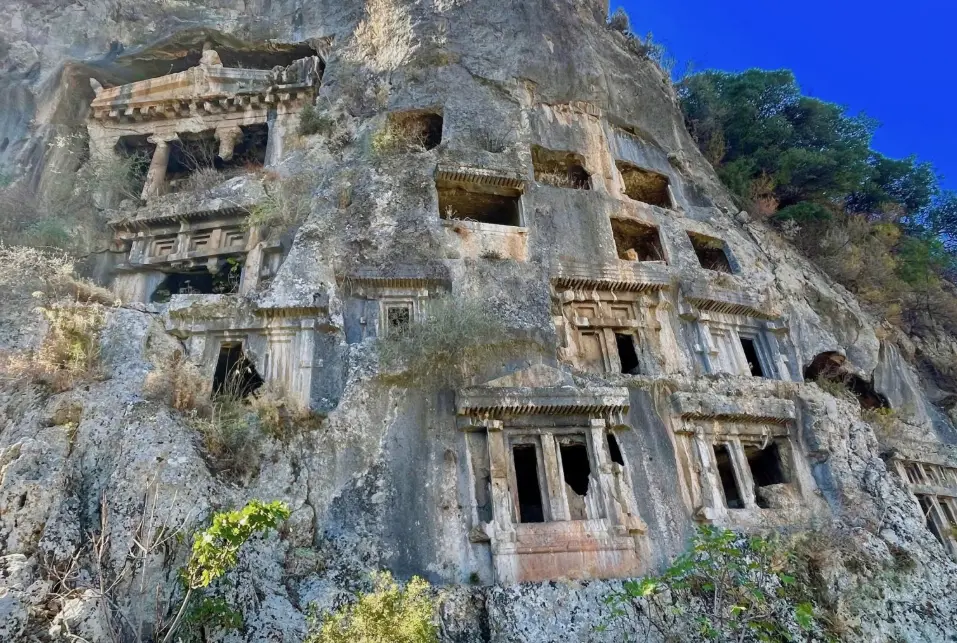
UNESCO InscriptionXanthos-Letoon, on the Lycian coast, is UNESCO World Heritage: and UNESCO is specific about why: it's the most distinctive surviving architectural evidence of a genuinely local Lycian civilization, with its own language and funerary tradition, that interacted with Hellenic influence rather than being absorbed by it.
Most charter itineraries flatten this coast into generic "Greek ruins." We won't. Understanding Lycia as its own culture: later reshaped again by Rome and Byzantium: changes what a stop at a Lycian rock tomb or sanctuary actually means, rather than leaving it as a photo opportunity with no context.
The Blue Voyage Is a Real Tradition: and a Different One Than You're Being Sold
Origins: 22 August 1946"VIP charter" marketing borrows constantly from the romance of the Mavi Yolculuk, the Blue Voyage: but the actual history is more interesting than the branding. Scholarly research places the first documented voyage on 22 August 1946, led by the writer Cevat Şakir Kabaağaçlı, known as the Fisherman of Halicarnassus, alongside Azra Erhat and Sabahattin Eyüboğlu.
It began as an educational and literary practice: intellectuals travelling by local boat to engage seriously with Anatolia's coastal history and archaeology: and only shifted toward the commercial yacht tourism we recognize today in the decades after Kabaağaçlı and Eyüboğlu's deaths in 1973. We won't claim your charter is the Blue Voyage. But we will design toward its original spirit: slower, better informed, and genuinely curious about the coast rather than skimming across it.
The Gulet: Rooted, Not Ancient
Living Boatbuilding CraftEvery gulet operator will tell you their boat descends from ancient fishing vessels. The honest version is more precise: the modern gulet is genuinely rooted in Bodrum's local boatbuilding, fishing, and sponge-diving traditions, but the vessel you'll charter: steel or laminated timber in many cases, modern engines, air-conditioned cabins, contemporary safety systems: is substantially a twentieth- and twenty-first-century evolution, not a preserved historical artifact.
That's not a lesser story. A living craft tradition that adapted to survive is more interesting, and more honest, than a fiction of unbroken antiquity.
Gökova and Göcek: Beauty Under Active Management
Marine Sanctuary ProtectionGökova Bay has held formal Special Environmental Protection status since 1988 and includes active no-fishing zones supported by community-led monitoring: a direct response to decades of overfishing pressure. Göcek's bays moved in 2026 to a controlled, reservation-based mooring system specifically to stop the seabed damage that unrestricted anchoring was causing to seagrass meadows.
Neither of these is a bureaucratic inconvenience. They are the reason those waters still look the way the brochures promise. We build your route around current regulations in both, and we will tell you plainly if a bay you've seen in a photograph simply isn't available to anchor in freely this season.
What This Actually Feels Like
Imagine your captain cutting the engine in a quiet cove near Knidos, and your guide explaining: not as trivia, but as something you can feel underfoot in the stillness: that the ancient harbour wall now visible just beneath the surface is there because the ground itself has been sinking for centuries. Geology, not decline. Not ruin, but motion, still happening, right under the hull.
Imagine mooring in Göcek on a buoy instead of an anchor, and understanding: because someone actually told you: that the seagrass meadow beneath you is the reason the water is that particular, improbable clarity, and that the buoy is the only reason it still will be next year.
Imagine reaching a Lycian tomb cut into a cliff face above the water and hearing it described not as "ancient Greek ruins," but as the funerary architecture of a specific, distinct people who wrote in their own language and negotiated, rather than dissolved into, the empires around them.
That is the register we design for: not spectacle, but the particular pleasure of being told the truth about a place that has earned a truer story than the one it's usually given.
Three Signature Route Frameworks
Starting architectures, not fixed packages: every route is rebuilt around your vessel's flag and class, current mooring and conservation regulations, weather, and your own Stage 1 discovery conversation before it becomes your itinerary.
The Carian Passage
Bodrum to Datça and Knidos
Opens where the modern charter coast itself began: Bodrum, its castle, its underwater-archaeology museum, and its boatbuilding tradition. Sails west along the Datça Peninsula to Knidos, where the ancient harbour's slow disappearance beneath the water becomes a lesson in active tectonics rather than a simple ruin to photograph. Suited to travelers whose interest runs toward geology, maritime archaeology, and the working history behind the modern gulet.
The Gökova Sanctuary
Slow Sailing Inside a Protected Sea
Built around Gökova Bay's protected status rather than in spite of it: quiet anchorages, community-monitored no-fishing zones, and a pace deliberately slowed to match a landscape under active conservation. This is the route for travelers who want the clearest possible water and the clearest possible reason it's still that clear: a genuinely restorative itinerary rather than a checklist of stops.
The Lycian Coast
Göcek, Fethiye, and the Rock Tombs
Threads through Göcek's islands under the current controlled-mooring system, along the Fethiye coastline, to the cliff-cut tombs and sanctuaries of Lycian civilization: read as the distinct cultural tradition it was, layered later by Hellenistic, Roman, and Byzantine rule rather than replaced by it. Our most historically dense framework, for travelers who want their week on the water to end with a real understanding of who actually built what they saw.
How We Ask You to Judge Us
We're not going to hand you a fleet-size number or a client-satisfaction percentage on this page: the honest research into Turkey's charter sector doesn't support presenting sector-wide statistics as if they were audited, operator-specific facts, and we'd rather tell you that than dress up a marketing number as proof.
Judge us instead on the questions we ask before you commit: what is this vessel's flag and commercial status, and what does that mean for your specific route; which bays on your wishlist are currently under mooring or conservation restrictions; and what happens to your itinerary if a regulation changes between booking and departure, as it did in Göcek in 2026. An operator willing to have that conversation before you pay is telling you something real about how the rest of the charter will be run.
Investment Parameters
Charter cost on this coast varies enormously by vessel class (gulet through crewed superyacht), flag and commercial status, season, duration, crew size, and route complexity: and any operator quoting a flat number before understanding your specific requirements is guessing on your behalf.
We'll return a considered proposal once we understand your vessel preference, dates, and guest count, built transparently around what that specific charter actually requires: not a generic rate card.
Seven Questions Worth Asking Before You Charter
Clear, legally grounded answers to the questions most charter brochures avoid.